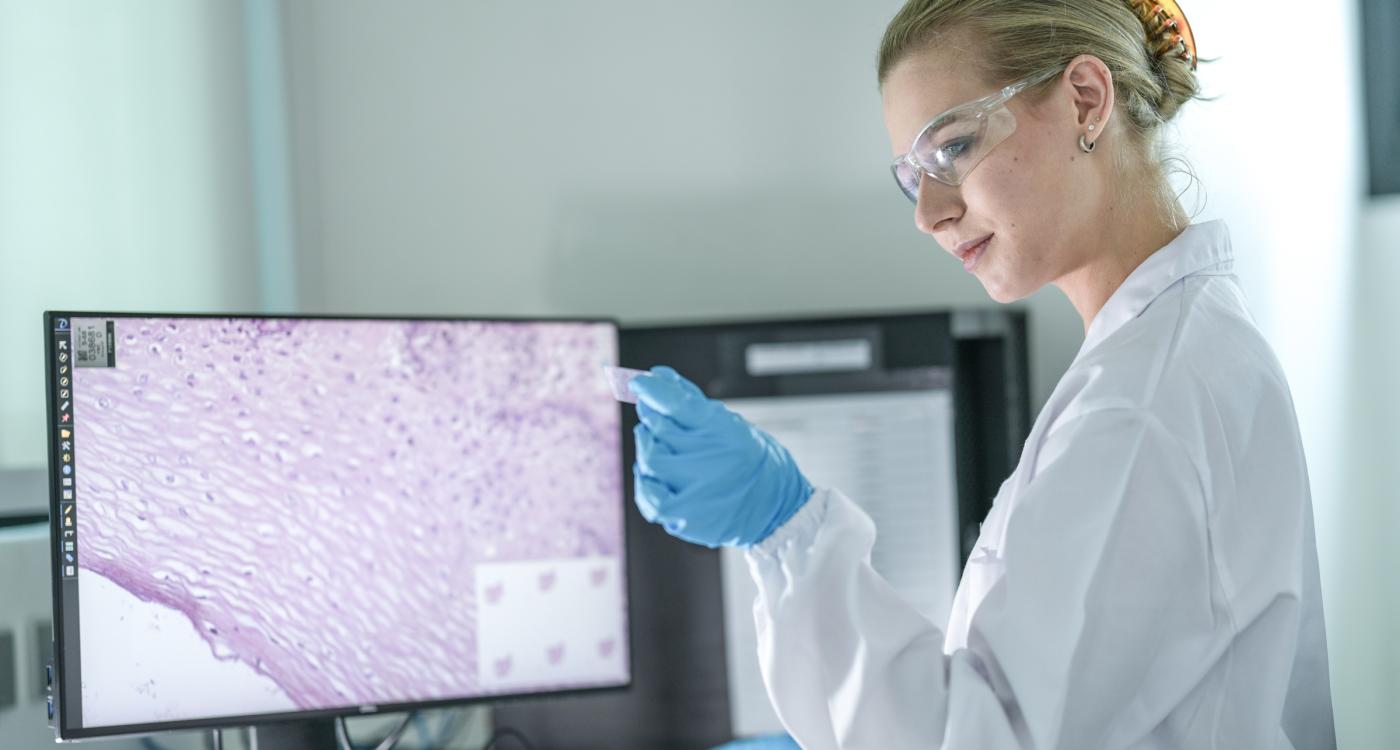
Cloud-Enabled Digital Pathology for Scalable Workflows
Royal Philips has announced the expansion of its digital pathology portfolio with the introduction of Philips IntelliSite Pathology Solution on HealthSuite, a cloud-enabled platform powered by Amazon Web Services (AWS). According to the company, the solution is designed to support healthcare organizations in scaling digital pathology adoption while reducing reliance on on-premise infrastructure.
The platform enables pathology laboratories to securely store, manage, and analyze large volumes of high-resolution pathology images. It also allows pathologists to access and review cases remotely, supporting collaboration across sites and improving workflow flexibility.
Addressing Workflow and Capacity Challenges
Pathology departments are facing increasing pressure from rising image volumes, workforce shortages, and the need to prepare for AI-enabled diagnostics. Many laboratories continue to operate hybrid environments, where traditional microscopy remains part of routine workflows.
Philips’ cloud-based digital pathology solution is intended to support the transition to fully digital workflows by offering:
- Scalable image storage and data management
- Remote access and case collaboration across sites
- Simplified IT infrastructure and reduced operational complexity
- Support for AI-enabled diagnostics and interoperability
By enabling centralized data access and streamlined workflows, the platform aims to improve diagnostic consistency and operational efficiency.
Supporting Enterprise Collaboration and AI Integration
The adoption of digital pathology is increasingly linked to broader healthcare digitalization strategies. Cloud-based solutions provide a foundation for integrating artificial intelligence (AI) applications and enabling data-driven diagnostics across departments.
“As early adopters of digital pathology, we have already experienced the operational and clinical value of working in a fully digital environment,” said Dr. Cordon-Cardo, Chair of the Department of Pathology, Molecular and Cell-Based Medicine at Mount Sinai Health System. “As our program matures, the ability to scale efficiently across sites and manage the growing volume of pathology data becomes increasingly important. A cloud-enabled deployment reduces reliance on on-premise infrastructure while providing the flexibility, performance, and scalability required for enterprise collaboration and AI integration. This represents an important next step in advancing our digital pathology strategy.”
Philips states that the solution supports enterprise integration and interoperability across diagnostic domains, including radiology, cardiology, and pathology.
Integration Within HealthSuite Portfolio
Philips IntelliSite Pathology on HealthSuite is part of the broader HealthSuite Integrated Diagnostics portfolio, which includes cloud-based diagnostic solutions designed to connect data and workflows across healthcare systems.
Key components of the portfolio include:
- Image Management on HealthSuite with Web Diagnostic Viewer
- Cardiovascular Workspace on HealthSuite
- AI-enabled visualization and data management tools
Together, these solutions aim to support coordinated diagnostic workflows and data interoperability across clinical disciplines.
“By combining scalable cloud innovation with deep domain expertise and end-to-end services, we partner with our customers throughout their transformation journey – from the first digital slide to fully connected ecosystems that help turn data into actionable insight for precision care,” said Martijn Hartjes, Business Leader Clinical Informatics at Philips. “Successful digital pathology adoption is not about technology alone, it’s about reimagining how care teams access clinical data and collaborate across a health system.”
Implications for Digital Diagnostics
The expansion of cloud-based digital pathology solutions reflects ongoing efforts to improve workflow efficiency, enable remote collaboration, and support AI integration in diagnostic imaging. As laboratories continue to transition toward digital environments, scalable and interoperable platforms are expected to play a central role.
Source: Philips